She Owned the Deed: How Lucknow's Courtesans Built Wealth While Most Women Couldn't Even Open a Bank Account
Let's set the scene. It's the mid-1800s. In the United States, a married woman legally cannot own property — her assets belong to her husband the moment she says "I do." In England, same story. Across most of the world, a woman's financial life is essentially a footnote in a man's ledger.
And then there's Lucknow.
In the gilded salons and elegant havelis of Nawabi Lucknow, a class of women called the tawa'if — courtesans who were also accomplished artists, poets, and cultural powerhouses — were doing something quietly revolutionary. They were buying property. Accumulating savings. Negotiating contracts. Employing staff. And passing real, tangible wealth on to the next generation of women in their households.
No husband's signature required. No permission slips. Just business.
What "Financial Independence" Actually Looked Like
When we talk about financial independence today, we mean things like having your own checking account, building an emergency fund, maybe maxing out your 401(k). The tawa'if of Lucknow were operating on a whole different level — and without any of the infrastructure we take for granted.
The kothas (the elegant establishments where tawa'if lived and performed) were, at their core, economic enterprises. A senior tawa'if — especially one who had cultivated a reputation for refinement, wit, and artistic mastery — could command extraordinary fees for performances, poetry recitations, and cultural mentorship. Wealthy patrons from the Nawabi court and the merchant class competed for her attention. That income didn't disappear into a household budget controlled by someone else. It went into her hands.
From there, the financial strategy gets genuinely impressive. Many tawa'if invested heavily in property — both in Lucknow and in surrounding regions. Real estate wasn't just a status symbol; it was a long-term income stream. Rental income from tenants meant money kept flowing even when performance fees fluctuated. Some women owned multiple properties simultaneously, functioning as landlords in an era when most women couldn't even be renters in their own right.
The Business of Patronage — And Who Really Had the Leverage
Here's what gets glossed over in most historical accounts: the tawa'if weren't just receiving patronage. They were managing it.
Patrons — nobles, merchants, poets — would often enter into long-term financial arrangements with a tawa'if. These weren't casual transactions. They were structured relationships with clear (if unwritten) terms. A patron might provide a stipend, gifts of jewelry, or property in exchange for exclusivity, companionship, or the social prestige of being associated with a celebrated courtesan. The tawa'if, in turn, knew exactly what she was worth — and she negotiated accordingly.
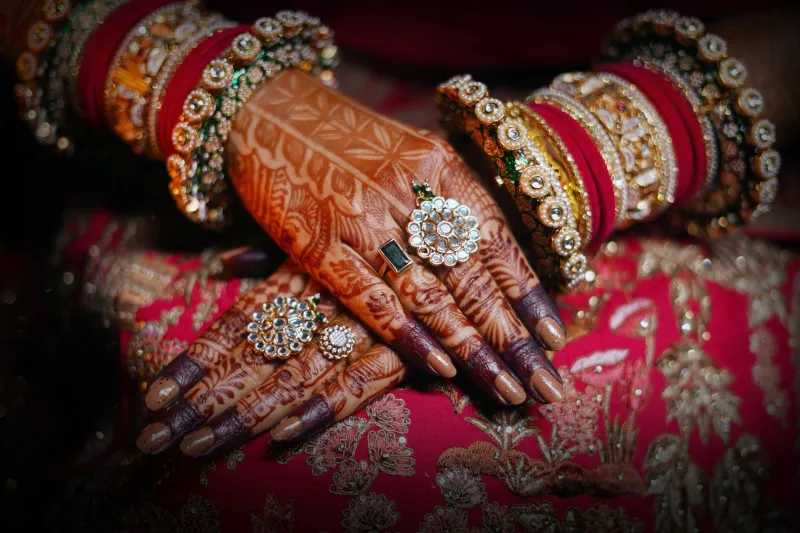
Jewelry deserves its own paragraph here, because it wasn't just decoration. Gold, precious stones, and elaborate ornaments functioned as portable, liquid wealth — the 19th-century equivalent of a brokerage account. A tawa'if's jewelry collection was her financial safety net, her investment portfolio, and her insurance policy all at once. She could liquidate it in a crisis, use it as collateral, or pass it on as inheritance. Every piece had both aesthetic and strategic value.
Inheritance on Her Terms
Maybe the most radical part of the whole system: the tawa'if controlled how her wealth moved after she was gone.
In a society where most women's assets would automatically transfer to a male relative upon death, the kotha operated by different rules. Wealth, property, and professional knowledge passed through the female line — from senior tawa'if to their daughters or adopted daughters, who were trained from a young age in music, dance, Urdu poetry, and the social arts that made the whole enterprise function.
This wasn't just sentimental. It was a deliberate economic structure. By keeping wealth within a matrilineal network, these women ensured that what they built couldn't be dissolved by a marriage, a male heir, or a legal system that wasn't designed with them in mind. They essentially built their own inheritance law from scratch.
Let that sink in for a second. These women created a parallel financial ecosystem because the official one was never going to work for them — and it worked.
What Modern American Women Can Actually Take From This
Okay, so we're not running 19th-century salons or negotiating with Nawabi patrons (most of us, anyway). But the core principles the tawa'if operated by are remarkably applicable right now.
Know your worth — and price accordingly. The tawa'if never undersold herself. She understood that her skills, her reputation, and her cultural capital had real monetary value. In a moment when women are still statistically underpaid across almost every industry, that lesson hasn't expired.
Diversify your income. Performance fees alone weren't enough — they invested in property, jewelry, and other assets that generated passive income. The modern translation? Don't rely on a single paycheck. Build streams.
Control your own financial narrative. One of the most powerful things about the tawa'if's economic model was that no single person controlled her money. Not a husband, not a patron, not a family elder. That autonomy was the whole foundation. In 2024, that means your own accounts, your own credit, your own financial literacy — before you need it.
Build networks that protect you. The kotha wasn't just a household; it was a mutual support system. Women looked out for each other's financial wellbeing in concrete, practical ways. Your network should be doing the same.
The Part History Forgot to Write Down
Here's the uncomfortable truth: the tawa'if's financial independence was possible partly because they existed outside the structures that constrained "respectable" women. The same social marginalization that made their lives difficult in some ways also freed them from certain patriarchal controls that governed property and inheritance.
That's not a reason to romanticize their circumstances — many tawa'if faced real hardship, exploitation, and social stigma. But it is a reason to recognize the ingenuity it took to build wealth and stability in spite of all of it. They didn't wait for the system to become fair. They built around it.
And honestly? That's a very Queen of Lucknow thing to do.
The women who owned Lucknow's most prized havelis, who held deeds in their own names, who passed fortunes down through matrilineal lines — they weren't waiting for permission. They were too busy counting what was already theirs.
The blueprint exists. It always did. We're just finally paying attention.