Nothing Lasts Forever — and Lucknow's Women Knew That Was the Whole Point
Somewhere between the algorithm updates and the brand audits and the endless pressure to build something that lasts, a lot of us forgot how to just exist in a moment without immediately trying to archive it.
Your feed knows it. Your screen time report definitely knows it. And honestly? So do you.
We are living in the era of the permanent mark — the personal brand, the legacy post, the highlight reel that's supposed to tell the world exactly who you are and exactly how well you're doing it. And for a lot of women, that pressure isn't just exhausting. It's quietly shrinking them.
But here's what's interesting: there's a city in northern India that built an entire civilization around doing the opposite — and the women at the center of it were anything but small.
The Art That Was Always Meant to Fade
In Lucknow, impermanence isn't a flaw. It's the feature.
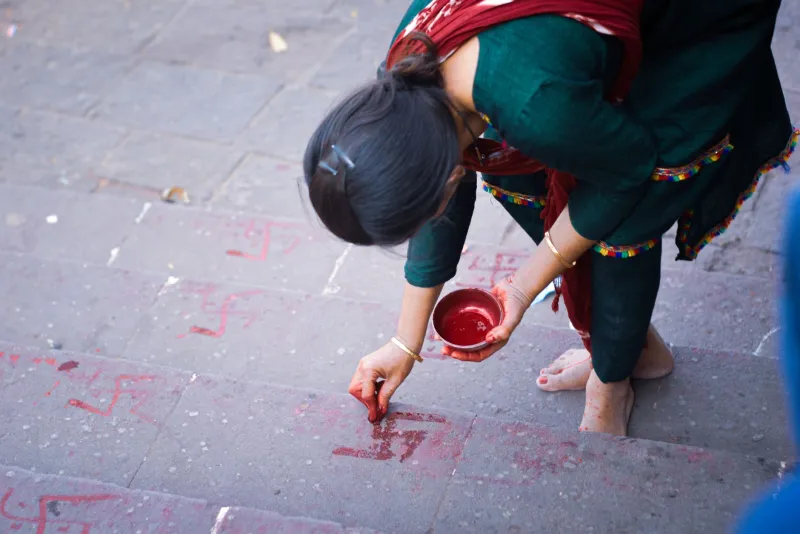
Take rangoli — the intricate, vibrantly colored floor designs that women across the region have been creating for centuries. Made from colored powders, rice flour, or flower petals, rangoli is painstakingly detailed, genuinely breathtaking, and completely temporary. It gets walked on. It gets rained on. It fades. And then it's gone.
The women who made it knew that from the start. They weren't deluded about its shelf life. They made it anyway — with full attention, full skill, and zero anxiety about whether it would still be there in a week.
That's not carelessness. That's a completely different relationship with creation.
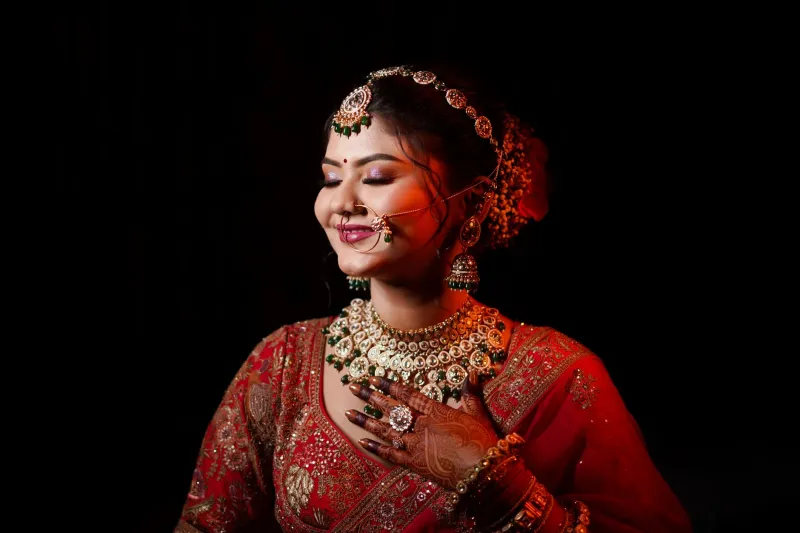
Or consider mehendi. The henna designs that Lucknow's women have elevated into something close to poetry — elaborate, layered, deeply personal — are drawn onto skin knowing they'll last maybe two weeks before fading entirely. There's no canvas. There's no archive. There's just the moment when the design is fresh and dark and vivid, and the slow, quiet disappearance that follows.
And then there's attar. Lucknow's legendary natural perfumes, distilled from flowers and woods and resins in a process that hasn't changed much in hundreds of years. Attar doesn't come in a bottle engineered to last all day and announce your presence across a room. It blooms on your skin and then softens. It's intimate. It's personal. And it's gone by evening.
These aren't accidents of technology or limitation. These are choices — aesthetic and philosophical ones — made by women who understood something about power that we've largely forgotten.
What Permanence Is Actually Costing You
Let's be real about what the pursuit of the permanent digital footprint is doing to women in this country.
The pressure to build a brand that outlasts you, to post content that performs forever, to become the kind of woman whose Instagram grid tells a coherent, aspirational, aesthetically consistent story — it's not just a time drain. It's a confidence trap.
Because when everything you make is supposed to last, everything you make becomes something to defend. You stop experimenting. You stop pivoting. You stop showing up as the version of yourself that exists right now because you're too busy protecting the version you already posted.
You become a museum curator of your own life.
And the cruel irony? The women who seem most magnetic, most genuinely powerful — online and off — are rarely the ones with the most polished permanent presence. They're the ones who seem completely unbothered by the idea that this moment is temporary. They're fully in it. They're not managing it.
Lucknow's Real Lesson About Confidence
Here's what centuries of ephemeral art actually teach us: confidence isn't about leaving a mark. It's about not needing to.
The women who created rangoli at dawn knowing it would be gone by noon weren't less serious about their craft. They were more serious — because they were making something purely for the experience of making it, not for the documentation of having made it. The absence of permanence freed them to be completely present.
That's a radical act. And in 2024, it might be the most radical act available to American women.
Imagine creating something — a dinner party, a project pitch, a personal style evolution, a difficult conversation — without immediately framing it as content. Without thinking about how it'll read in retrospect. Without building it to last.
Imagine just doing it, fully and beautifully, and then letting it go.
That's not giving up. That's the whole point.
The Fade Is Not the Failure
We've been sold a story that says if something doesn't last, it didn't matter. That a relationship that ends was a waste. That a career pivot erases everything you built before. That a viral post that stops performing means you've already peaked.
Lucknow's women — the ones who spent hours on henna designs that would be gone in two weeks, who wore attars that wouldn't survive the day, who built rangoli knowing the wind would come — those women would have found that story genuinely baffling.
Because they understood that the fade is not the failure. The fade is proof that something real happened. Real things move through time. Real things change. Only the fake stuff stays perfectly preserved forever.
There's a reason we call something that's lost its vitality static.
How to Actually Practice This
This isn't about deleting your Instagram or abandoning your professional ambitions. It's about loosening the grip.
Start small. Make something this week that you don't photograph. Cook a meal and eat it without posting it. Wear an outfit and don't document it. Have a conversation that you don't turn into a caption.
Notice what that feels like. Notice if it feels like loss — and then notice if that feeling passes, and what's underneath it.
If you want to go deeper, look into the actual traditions. Mehendi artists in Lucknow are still practicing a craft that takes years to master and produces work that disappears in days. There's something genuinely humbling about that ratio. Something that resets your sense of what effort is for.
And consider your relationship with fragrance — specifically, with the idea of wearing something that isn't trying to announce itself permanently. Attar, applied to warm skin, is a deeply private experience. It's for you and whoever is close enough to notice. That's a different kind of presence than the kind we've been taught to perform.
Let It Go — That's the Power Move
The queens of Lucknow weren't chasing permanence. They were building presence. And there's a difference that matters enormously.
Presence is alive. It's responsive. It changes with the room, the season, the moment. It can't be archived because it exists only in real time.
And it turns out that's exactly what makes it unforgettable.
So the next time you feel the pull to build something that lasts forever — to lock in the brand, to nail down the legacy, to make sure everyone remembers — ask yourself whether that impulse is actually about power, or whether it's about fear.
Because the most fearless thing you can do right now might just be to make something beautiful, let it exist fully, and then let it go.
Lucknow figured that out centuries ago. We're just catching up.