They Ran Lucknow Before Anyone Let Them: The Historical Women Who Wrote the Playbook on Power
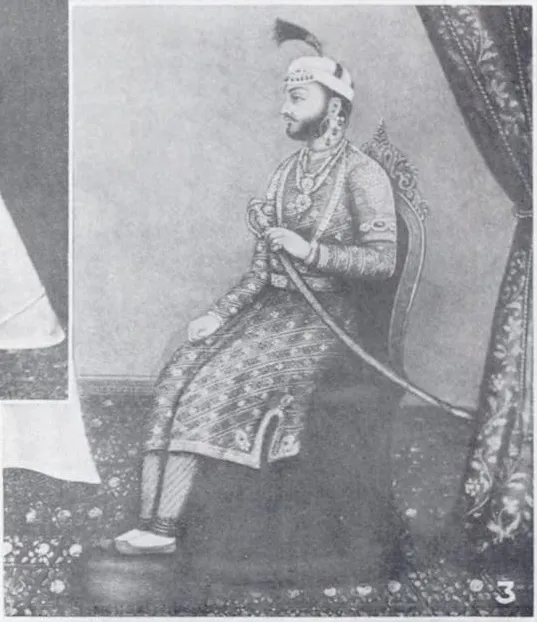
Photo: Unknown artist, Public domain, via Wikimedia Commons
History has a habit of remembering women in relation to men. As wives, daughters, muses. The women of Lucknow — a city that has always been louder, more layered, and more complicated than any single narrative can hold — were rarely content with that supporting role. And yet, most of us never learned their names.
Let's fix that.
Because if you're an ambitious woman navigating a world that still hasn't quite figured out what to do with you — negotiating your salary, fighting for credit on a project that was yours, building something in a space that wasn't designed with you in mind — you have predecessors. Women who did all of that without LinkedIn, without a therapist, and often without legal rights. They did it with wit, strategy, cultural mastery, and an absolute refusal to be diminished.
This is their story. And it's yours too.
The Tawaif: Misunderstood, Powerful, and Completely in Control
Let's start with the most misunderstood women in South Asian history: the tawaifs of Lucknow's kothas.
Western pop culture — and frankly, a lot of mainstream Indian culture — has reduced these women to a single, dismissive word. That reduction is both inaccurate and deeply convenient for everyone who benefited from erasing their influence.
The tawaifs of Lucknow during the Nawabi era (roughly the 18th and 19th centuries) were, in reality, the city's most educated, most culturally powerful women. They were trained in classical music, Urdu poetry, dance, rhetoric, and the art of sophisticated conversation — skills that the wives of nawabs and zamindars were actively denied. Lucknow's kotha culture was the primary space where Urdu literature was refined, where classical kathak dance was preserved, and where the city's famous tehzeeb (refined culture) was actually practiced and transmitted.
These women were patrons of the arts. They ran their own financial households. They negotiated contracts. They chose their clients. They educated their daughters in the same disciplines. In a city where aristocratic women were largely confined to the zenana (women's quarters), tawaifs moved through public life with a kind of agency that was, by the standards of the time, extraordinary.
The lesson: Expertise is its own form of power. When you are the most knowledgeable person in the room — about your industry, your craft, your value — you set the terms. The tawaifs didn't wait for permission to become essential. They built their indispensability from the inside out.
Begum Hazrat Mahal: The Queen Who Said No to the British Empire
If you need a historical role model for standing your ground when the stakes are existential, meet Begum Hazrat Mahal.
When her husband, Nawab Wajid Ali Shah, was exiled by the British East India Company in 1856 — and when the British expected Lucknow to simply accept annexation and move on — Hazrat Mahal did not accept. She organized resistance. She rallied troops. She declared her young son the legitimate ruler and governed in his name. She was a central figure in the 1857 uprising against British colonial rule, one of the most significant anti-colonial rebellions in Indian history.
After the uprising was suppressed, she refused the British offer of a pension in exchange for surrender and submission. She escaped to Nepal, where she lived in exile until her death — on her own terms, unbroken.
She was not supposed to have political power. She was a secondary wife in a court that had been dissolved. She had every structural reason to acquiesce. She chose not to.
The lesson: Your title doesn't determine your authority — your willingness to act does. Hazrat Mahal didn't wait for an official role or a formal mandate. She saw a vacuum of leadership and she stepped into it. When you're in a situation where no one is doing what needs to be done, sometimes the most powerful move is simply deciding that you will.
Mahadevi Verma: The Poet Who Made Vulnerability a Political Stance
Not all power looks like confrontation. Sometimes it looks like a woman sitting down and writing exactly what she feels in a world that has told her feelings are irrelevant.
Mahadevi Verma — born in Farrukhabad but deeply rooted in the literary world of Uttar Pradesh and a towering figure of the Chhayavadi (Romantic) movement in Hindi literature — was a poet, essayist, educator, and women's rights advocate who used her pen as a political instrument. She wrote about pain, longing, spiritual seeking, and the interior lives of women with an honesty that was, at the time, almost scandalous in its directness.
She also ran a school for girls. She championed the rights of women from marginalized communities. She refused marriage and lived independently at a time when that choice was nearly incomprehensible. She received the Jnanpith Award — India's highest literary honor — in 1982.
The lesson: Authenticity is a competitive advantage. Verma didn't soften her voice to make it more palatable. She made her specific, interior, female experience the subject of serious literature and demanded that the world take it seriously. In professional life, women are often told to be more neutral, more objective, less personal. Verma's legacy suggests the opposite: your particular perspective, fully expressed, is your most valuable asset.
What Lucknow's Women Are Still Teaching Us
There's a through-line in these stories that goes beyond individual biography. These women operated in systems that were not built for them — colonial systems, patriarchal systems, class systems — and they found ways to move within and against those systems with intelligence and intention.
They didn't all win by conventional measures. Hazrat Mahal died in exile. Many tawaifs saw their culture systematically dismantled by colonial-era morality laws. But they shaped the world they lived in, and their influence echoes forward.
For women in the US navigating their own complicated systems — industries that undervalue them, rooms where they're the only one who looks like them, negotiations where the deck is stacked — these histories are not just inspiring. They're instructive.
You come from a long line of women who figured it out anyway. Women who were too strategic to be defeated and too stubborn to disappear.
That's the Lucknow legacy. Own it.