The Art of the Unspoken No: What Lucknow's Courtesans Knew About Power That No Assertiveness Coach Ever Taught You
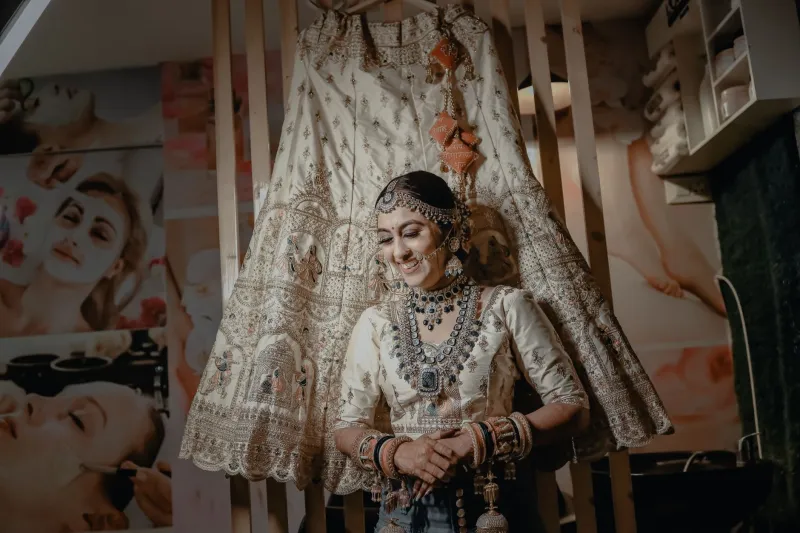
Somewhere between your third listen to a podcast about 'radical honesty' and the moment you rehearsed a boundary-setting script in the mirror before a difficult conversation, a different kind of wisdom got lost. It's the kind that doesn't come with a workbook. It was never taught in a corporate communication seminar or pinned on a motivational Instagram grid. It lived — quietly, devastatingly effectively — in the salons of 19th-century Lucknow, in the lifted eyebrow of a tawa'if who had already decided the answer was no before the question was even finished.
And she never had to say it out loud.
The Salon as a Stage for Sovereign Communication
Lucknow's tawaif culture is often misunderstood in Western contexts, reduced to a footnote or filtered through a colonial lens that couldn't quite make sense of women who held genuine social authority. But the reality was far more layered. These women were the cultural arbiters of an entire city. They were poets, musicians, and linguists. They set the standard for Urdu speech so refined that Nawabs sent their sons to learn etiquette from them — not the other way around.
In that context, communication wasn't just functional. It was an art form with its own grammar, its own syntax, its own silences that meant more than sentences. And refusal — the act of saying no — was perhaps the most sophisticated expression in the entire vocabulary.
Because in a world where women technically had very little formal power, the ability to decline without confrontation, to redirect without rejection, to close a door so gracefully that the other person didn't immediately realize they'd been turned away — that was everything. That was survival. That was sovereignty.
The Coded Language of 'Not Quite Yes'
Urdu, the language of Lucknow's golden era, is structurally built for nuance in a way English simply isn't. It carries layers of formality, registers of intimacy, and constructions that allow a speaker to technically say one thing while meaning something entirely different — and have everyone in the room understand both meanings simultaneously.
The tawaif weaponized this fluency. A patron who overstayed his welcome might be offered tea — a gesture of hospitality that was also, unmistakably, a signal that the evening was over. A request for a particular song might be met with a performance of a different one, the choice itself communicating a message the performer would never state directly. An unwanted advance might be deflected with a ghazal — a love poem — that spoke so beautifully of longing that the listener was distracted from the fact that nothing had actually been promised.
This wasn't manipulation. It was mastery. The distinction matters enormously.
Manipulation obscures truth for personal gain at someone else's expense. What these women practiced was something closer to diplomatic fluency — a way of navigating power imbalances without triggering the defensiveness, aggression, or retaliation that a blunt refusal might have provoked. They protected themselves. They maintained the relationship when the relationship had value. And they did it without ever losing the upper hand.
Why American Women Are Unlearning 'Just Say No'
American communication culture is, broadly speaking, direct. We're raised to value clarity, to say what we mean, to 'use our words.' And there is genuine power in that directness — don't let anyone convince you otherwise. The ability to say a clear, unambiguous no is a skill worth having, and the cultural work done to help women feel entitled to that directness is real and important.
But here's what gets lost in the directness-at-all-costs framework: context is everything, and not every context rewards bluntness equally.
A woman who says a flat, unexplained 'no' in a professional setting is still — in 2025, in the United States of America — more likely to be labeled difficult, cold, or uncooperative than her male counterpart doing the exact same thing. That's not a personal failing. That's a structural reality. And navigating structural reality sometimes requires a more expansive toolkit than the one assertiveness training hands you.
More and more women are recognizing this. Not as a retreat from directness, but as an expansion of it. The goal isn't to go back to performing compliance. The goal is to have options — to know when a clear no serves you best, and when a strategically ambiguous one leaves you holding more power than a confrontation ever would.
The Strategic Ambiguity Playbook
So what does this actually look like in practice? How do you channel centuries of Lucknowi communicative genius in a modern American boardroom or a complicated personal relationship?
It starts with understanding that silence is a response. When you don't answer a question immediately, when you let a beat pass before you speak, you are communicating something — and often, that something is more powerful than whatever words would have filled the space. The tawaif knew that the pause before the performance began was part of the performance. The moment before you respond is part of your response.
It continues with redirection. Instead of declining directly, you change the frame. You shift the conversation toward what you can offer, what you are interested in, what the other person actually needs underneath the request they made. This isn't avoidance — it's precision. You're answering the real question, not the surface one, and in doing so, you're demonstrating a level of perception that is itself a form of authority.
And it lives in the graceful non-commitment. 'I'll think about it' is not weakness. 'Let me see how things unfold' is not indecision. These phrases, deployed intentionally, are holding patterns that give you time, preserve the relationship, and keep your options open — which is often exactly what power looks like in practice.
The No That Doesn't Need an Explanation
Here's the deepest lesson from Lucknow's most powerful communicators: an explanation is a negotiation. When you explain your no, you invite a counterargument. You suggest that the right rebuttal might change your answer. You transform a decision into a debate.
The tawa'if who communicated refusal through a choice of song, a shift in posture, a particular poem — she offered no such opening. Her no was complete. It was elegant. And because it was never stated outright, it couldn't be argued with directly. The conversation simply moved elsewhere, on her terms.
That's not passivity. That's a level of control most people never achieve even with the most direct language imaginable.
Modern women are often told that owning our voice means being loud with it. And sometimes it does. But Lucknow's history offers a different, older, equally valid truth: sometimes owning your voice means knowing exactly when not to use it — and understanding that the silence you leave behind can say everything that needs to be said.
The queens of Lucknow's salons didn't wait for permission to set terms. They set terms through the very texture of how they communicated, through the poetry they chose, the tea they poured, the look they gave that said we're done here more clearly than any sentence ever could.
You don't have to explain yourself to wield that kind of authority. You just have to know what you're saying — even when you're saying nothing at all.