Dum, Drama, and Dessert First: How to Throw a Dinner Party Like the Nawabs Never Left
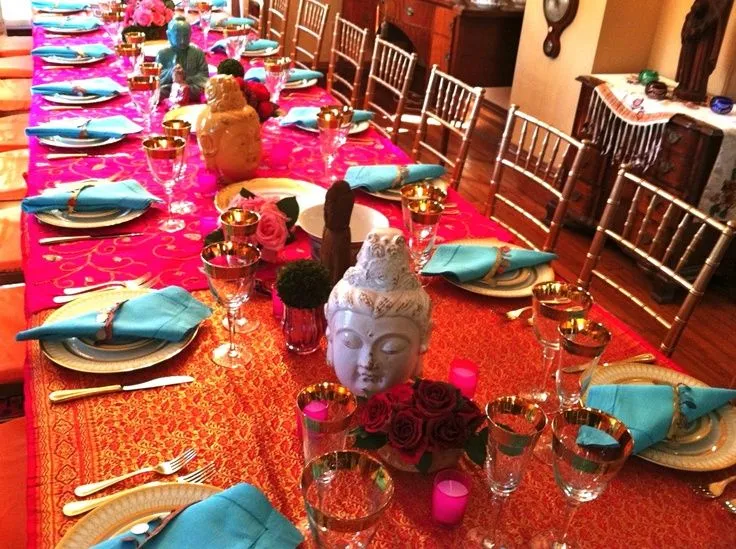
Photo: elegant indian dinner party table hosting friends, via i.pinimg.com
Somewhere between the third glass of wine and the charcuterie board nobody touched, the average American dinner party loses its soul. Everyone had fun. Nobody remembers it.
Lucknow never had this problem.
The city that gave the world Awadhi cuisine — the slow-cooked, saffron-scented, silk-smooth food of the Nawabs of Oudh — treated hosting as an art form with actual technique behind it. Not money. Not a caterer. Technique. And the women who ran those kitchens and drawing rooms were the ones holding the whole production together while making it look like a breeze.
Here's what they knew, translated for your Tuesday-night dinner party in Chicago or your Saturday gathering in Brooklyn.
Rule #1: Cook Low, Cook Slow, Look Unbothered
The signature move of Awadhi cooking is dum — sealing a pot with dough and letting rice, meat, and spices steam in their own sealed world for hours. Biryani made this way doesn't shout. It whispers, and then it knocks people flat.
The American equivalent? Stop serving food that requires last-minute panic. Braise short ribs the day before. Let a pot of spiced dal or a rich mushroom pulao do its thing on the stove while you actually talk to your guests. The hostess who's sweating over a stove at 9 p.m. is the hostess nobody remembers. The one sipping wine while something incredible finishes itself? That's the nawabi move.
Try this: A chicken yakhni pulao made with store-bought rotisserie chicken stock, doctor'd with cardamom, cinnamon, and a bay leaf. Nobody needs to know it took 40 minutes.
Rule #2: Layer Everything — Including the Evening
Awadhi food is famously built in layers: the aroma hits first, then the texture, then the slow heat underneath. Apply that to your evening. Don't dump everything at once.
- Layer one: Something to nibble the second people walk in — spiced nuts, papadum crisps with mint chutney, or honestly, good olives. Arrival hunger is real hunger.
- Layer two: A real seated moment. Even if it's just one showstopper dish, put it in the middle of the table and let people serve themselves family-style.
- Layer three: The close. Lucknowi meals ended with something perfumed and delicate — kheer, kulfi, anything with rose or cardamom. A cardamom rice pudding with pistachios takes ten minutes of actual work and makes people think you have a pastry chef on retainer.
Rule #3: 'Effortless Abundance' Is the Whole Flex
The nawabi ideal was tehzeeb — refined grace. The hostess of a Lucknowi salon never announced how hard anything was. She never said "oh, this is so easy" or, worse, "I've been cooking since 2 p.m." Both are insecurity in different fonts.
The power move is abundance without commentary. Platters that keep coming. Water glasses that mysteriously refill. A guest who mentions they're vegetarian and — surprise — there's already a dish for them, because you planned it Tuesday. That's not hospitality. That's logistics dressed as magic.
Rule #4: Make One Guest Feel Like Royalty, Every Time
Old Lucknow ran on a concept called mehmaan-nawazi — guest worship, basically. The guest was a walking blessing. Pick one person per party (rotate it, this is not a favoritism economy) and give them the extra attention: the best seat, the first pour, the follow-up text the next day.
Here's the thing nobody tells you: everyone watches how you treat one person and assumes you'd do the same for them. It costs you nothing and buys you a reputation.
Rule #5: End Before You Want To
Nawabi gatherings had shape. They didn't dissolve into a couch-scrolling fog at midnight. Have a final beat — the dessert, a round of chai with cardamom, one last pour — and then let the night land instead of trailing off.
A dinner party that ends on purpose feels like an event. A dinner party that ends because everyone got tired feels like a Tuesday.
The Real Secret
Notice what's missing from this list? A dining room big enough for twelve. A six-burner range. Money.
The women who perfected this style of hosting were often working within constraints — small kitchens, limited ingredients, guests of wildly different ranks sharing one table. They innovated because they had to, and turned necessity into legend.
So no, you don't need the marble countertops. You need the mindset: plan like a general, cook like you have all the time in the world, and never once let them see the spreadsheet.
That's how you own the city. Any city.