The Letter Was the Original Long Game: Lucknow’s Slow-Romance Playbook for a Swipe-Addicted World
Your phone lights up at 11:42 p.m. It’s a three-word message from someone you matched with on Tuesday. You type, delete, type again. You add an emoji. You remove the emoji. You send something that sounds casual but took eleven minutes to engineer. And somewhere in the back of your mind, a tiny voice asks: is this really the best we can do?
Lucknow’s women would have had thoughts. Not because they were anti-pleasure or anti-flirtation—please, they invented whole languages of desire—but because they understood something the modern dating economy has trained us to forget. Seduction is not a speed sport. The pause is part of the point.
The Read Receipt Is Not a Love Language
Dating apps compress courtship into a series of micro-decisions. Reply fast or seem desperate? Wait an hour or seem cold? Use a full sentence or seem intense? The whole thing is designed to make you feel like you’re auditioning for a role you haven’t even read for.
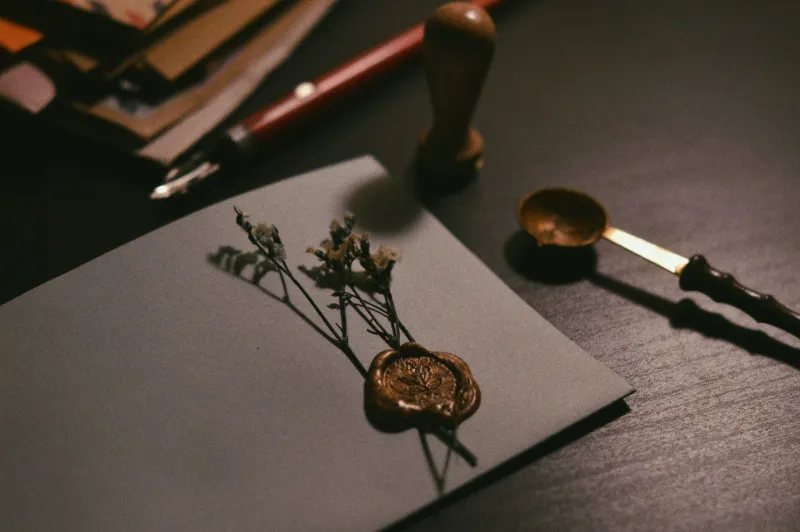
In Lucknow’s courtly culture, the handwritten note did something different. It slowed the whole exchange down. A letter had to be composed, folded, sealed, carried, delivered, opened, read, and then answered. Every stage added texture. Every delay was a kind of information. Not because women were playing games, but because they were making room for desire to become deliberate.
That’s the distinction worth stealing. A handwritten note is not ‘old-fashioned’ in the dusty sense. It is a technology for paying attention. It says: you were worth ink.
What the Zenana Knew About Timing
The women of Lucknow’s elite households and its celebrated courtesan salons understood that mystery is not the same as manipulation. Mystery is the space you leave for another person to wonder. It is the difference between being fully known on the first date and being slowly discovered over many.
A note that arrives three days after a meeting can be more electrifying than a text that arrives three seconds after one. The waiting does something to the imagination. It lets anticipation do the work.
But here’s the progressive part: slow romance is not about pretending to be busy or making someone earn your attention through anxiety. It’s about discernment. You are not a content creator for someone else’s dopamine loop. You are a whole person with a life, a rhythm, and a right to choose when and how you open the door.
The Lucknow women who wrote letters and sent messages through trusted hands weren’t just being coy. They were curating the conditions under which they could be seen. That is power. And it is available to you without a single calligraphy pen.
The Note That Does the Work
You do not need to write a sonnet. You need to send one handwritten note to someone you actually like. That’s it. One note. Not a novel. Not a performance. Just a small, specific, honest thing.
Try this: ‘I saw this postcard and thought of the way you laughed at that terrible joke on Thursday. Hope your week is less terrible.’ That’s it. No pressure. No essay. No ‘just wondering where this is going.’
Then you wait. Not as a tactic. As a boundary. You put the note in the mail and you go live your life. If you get a response, great. If you don’t, you have lost nothing but a stamp and a little dignity-free overthinking.
The note works because it is harder to ignore than a text and easier to trust than a DM. It has weight. It has handwriting. It has the faint possibility of a smudge. It says someone sat down and chose you, for a minute, in the middle of their day.
Slow Seduction Is a Boundary, Not a Trick
Let’s be clear: slow romance is not about withholding affection to make someone chase you. That’s just anxiety in a vintage dress. Slow romance is about refusing to rush your own discernment.
You are allowed to take three days to decide how you feel. You are allowed to not answer a message until you have something real to say. You are allowed to let a first date end without a kiss, a promise, or a follow-up text that night. The people who matter will still be there. The people who need instant gratification will find someone else, and that is a gift.
This is especially useful for American women who have been trained to be ‘cool’ by being available and ‘chill’ by being agreeable. The Lucknow model is different. It says: be warm, be interested, be playful—but do not hand over your whole nervous system in the first ten minutes.
A 2026 Version of the Lucknow Letter
You do not need a messenger. You need a little intention.
Start with one analog move per week. Send a postcard from a museum gift shop. Leave a voice note instead of a text. Write down one thing you noticed about them and mail it. Plan a date that includes a walk or a drive, so the conversation has time to breathe.
And when your thumb hovers over the double-text at midnight, use the Lucknow pause. Not as a game. As a check-in. Ask yourself: am I reaching for connection, or am I reaching for reassurance? If it’s connection, send the message in the morning with a clear heart. If it’s reassurance, put the phone down and go to bed.
The letter was never really about paper. It was about making desire legible. It was about refusing to let romance become a reflex. And in a world of read receipts and disappearing messages, that might be the most radical thing you can do.