Fewer Pieces, More Power: What Lucknow's Women Knew About Luxury That the Entire Fast-Fashion Industry Doesn't Want You to Figure Out
Let's get one thing straight before we go any further: what Lucknow's historical women practiced had absolutely nothing to do with the sanitized, Instagram-friendly minimalism that swept through American interiors and wardrobes over the last decade. No stark white walls. No capsule collections built around beige. No self-congratulatory restraint performed for an audience.
What they practiced was something far more subversive — and far more satisfying.
It was radical selectivity. The deliberate, almost fierce act of choosing fewer things and demanding that every single one of them be extraordinary.
The Wardrobe as a Statement of Self
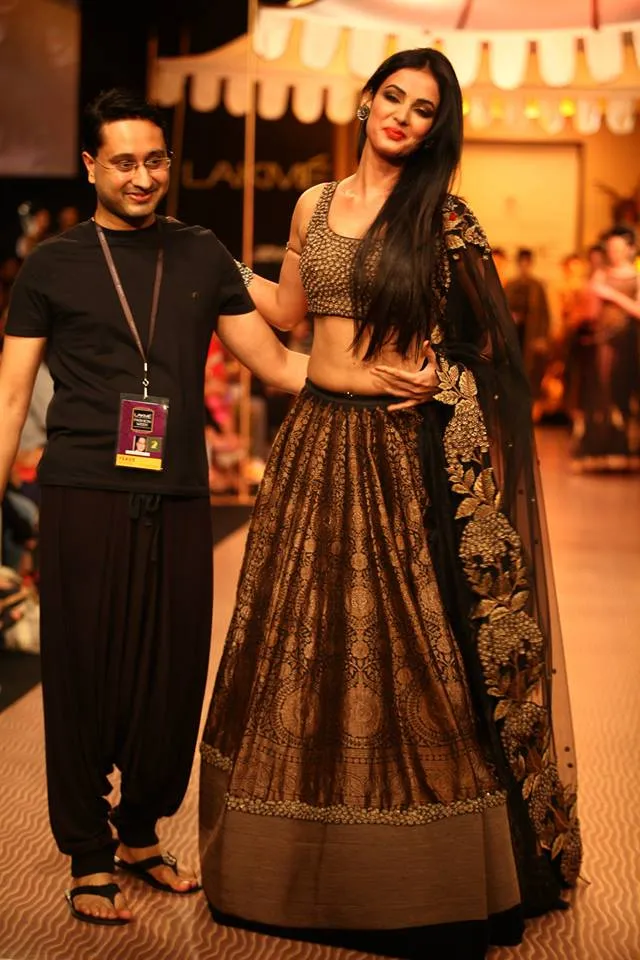
In the courts and salons of historical Lucknow, a woman's wardrobe wasn't measured in volume. It was measured in weight — the kind of weight that came from a single Banarasi silk dupatta so finely woven it could pass through a finger ring, or a set of Kundan jewelry assembled by artisans whose families had spent generations perfecting the craft. These weren't items you cycled through seasonally and donated to Goodwill by March. They were investments. Heirlooms before they were even old enough to be called that.
The tawa'if and the noblewomen of Lucknow's Nawabi era understood something that modern consumer culture has spent billions of dollars trying to make us forget: true luxury isn't about having more options. It's about having the right things — pieces so well-made, so deeply considered, that they become extensions of who you are rather than costumes you rotate through.
A woman who walked into a mehfil wearing one perfectly draped, flawlessly crafted ensemble commanded more attention than a woman draped in a dozen forgettable ones. The room felt the difference, even if it couldn't always articulate why.
What American Minimalism Got Wrong
Here's the thing about the minimalism trend that took hold in the US — it was well-intentioned but it missed the point entirely. It told women to own less, sure. But it often replaced one form of consumption with another, just quieter and more expensive-looking. Thirty identical white tees. A "curated" closet that still somehow needed refreshing every season. Minimalism, American-style, was still fundamentally about buying. It just bought differently.
Lucknow's philosophy wasn't about buying less for the sake of aesthetic cleanliness. It was about buying better because the thing you brought into your life deserved to stay there for decades. The chikankari kurta you saved for wasn't a trend piece — it was a relationship. The attar you wore wasn't a seasonal fragrance — it was a signature.
There's a profound difference between owning fewer things because you've embraced scarcity as a visual concept and owning fewer things because every single item you possess is so deeply excellent that you genuinely don't need anything else. One is a style choice. The other is a philosophy.
Craft as Currency
Lucknow has always been a city that understood the economics of craft. The city's chikankari embroidery tradition — still very much alive today — represents hundreds of hours of hand labor per piece. Genuine chikankari isn't cheap, and it was never meant to be. The price tag was never just for the fabric. It was for the knowledge, the time, the lineage of skill that went into every stitch.
When Lucknow's women chose a piece of jewelry, they were often choosing something made by a karigar whose family had worked with the same techniques for generations. Kundan settings, meenakari enamelwork, polki diamonds set in gold — these weren't impulse purchases. They were considered acquisitions that held their value, told a story, and grew more meaningful with time.
Compare that to the $35 statement necklace from a fast-fashion retailer that turns your neck green by summer's end. The math isn't even close.
American women who are finally waking up to the true cost of disposable fashion — environmental, financial, emotional — are finding that this Lucknow-rooted philosophy gives them a framework that actually works. Not "buy nothing" but "buy once, buy brilliantly."
Building Your Own Legacy Wardrobe
So what does this actually look like in practice for a woman living in Chicago or Houston or Portland in 2025?
It starts with a shift in the question you ask yourself before any purchase. Instead of "Do I like this?" you start asking "Will I still want this in fifteen years?" Instead of "Is this on sale?" you ask "Is this made well enough to earn a permanent place in my life?"
It means investing in one exceptional piece of South Asian textile craftsmanship — a hand-embroidered shawl, a genuine silk piece, a well-sourced attar — rather than buying five fast-fashion approximations that gesture vaguely in that direction. American women are increasingly discovering that a single piece of authentic chikankari worn with Western separates hits differently than an entire rack of trend-driven pieces. It's a conversation starter. It's a power move. It's a story.
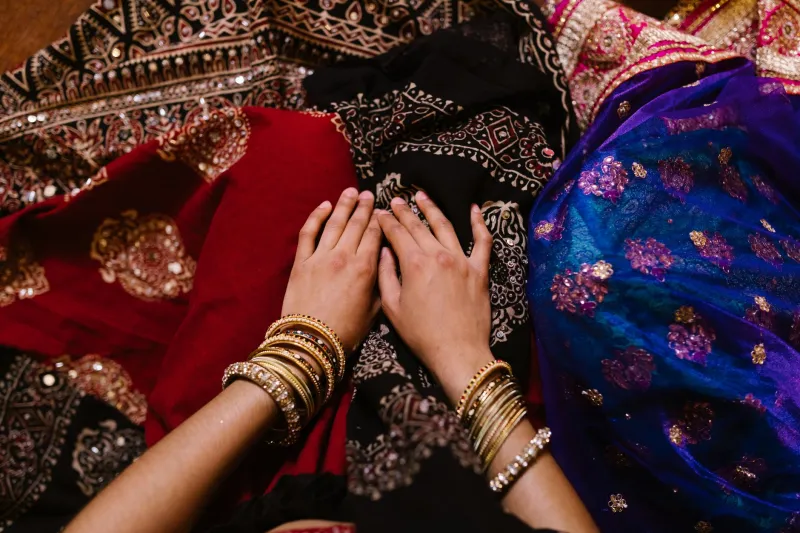
It also means rethinking jewelry. Lucknow's women didn't stack their wrists with cheap bangles for volume. They chose pieces that meant something — that were made with intention and worn with the same. Whether that's a piece sourced directly from an Indian artisan marketplace, an heirloom you've finally committed to wearing instead of storing, or a single bold investment piece from an independent designer, the principle holds.
The Real Flex Is Knowing Exactly What You Want
Here's what nobody in the fast-fashion conversation wants to admit: owning a closet full of disposable pieces is actually the easier choice. It requires almost no discernment. You just consume. The harder, more powerful thing is knowing yourself well enough to choose only what genuinely serves you — and then having the discipline to stop there.
Lucknow's most formidable women were formidable in part because they were decisive. They knew their own taste. They didn't need external validation in the form of constant newness. Their style was a reflection of an interior certainty that no trend cycle could rattle.
That kind of confidence? It doesn't come from a full closet. It comes from a clear one.
The queens of Lucknow weren't minimalists. They were maximalists about quality and ruthlessly selective about everything else. There's a lesson in that for every woman standing in front of a closet full of clothes and feeling like she has nothing to wear.
Buy less. Buy better. Know why. That's the Lucknow way — and honestly, it always was.