No Gatekeepers Needed: Meet the Lucknow Designers Rewriting the Global Fashion Rulebook
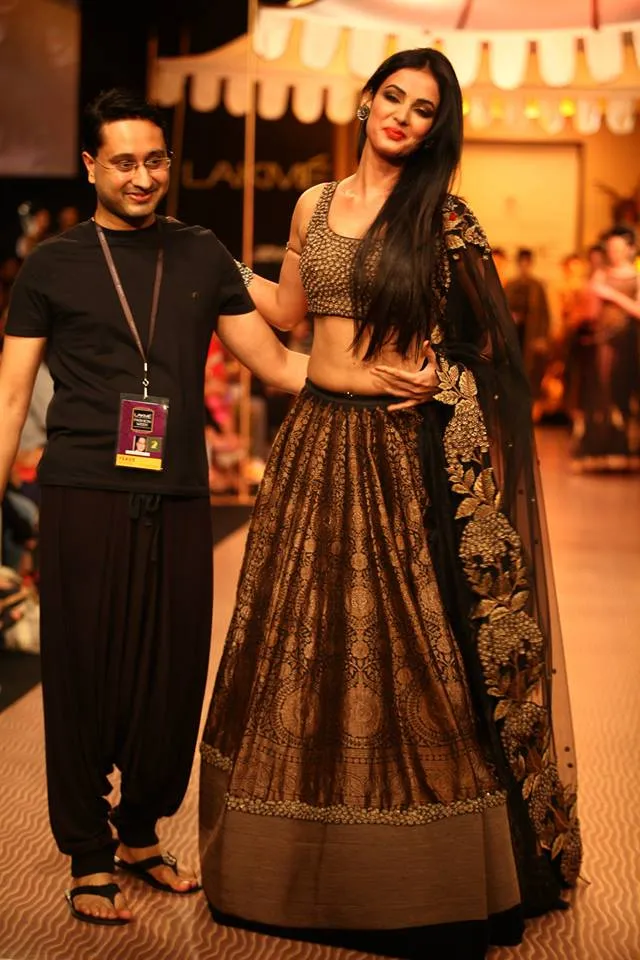
Photo: Sou Boyy, CC BY-SA 3.0, via Wikimedia Commons
For decades, the story of "global fashion" has been told from a very specific set of zip codes. Paris. Milan. New York. London. The fashion industry has had a long, comfortable habit of deciding which aesthetics count as sophisticated, which traditions count as high fashion, and which designers get to play on the big stage. Spoiler: it hasn't always been particularly generous to women whose creative roots run through South Asia.
But something is shifting — and a lot of that shift is happening in Lucknow.
A new wave of designers, most of them women, most of them working with craft traditions that are centuries old, are bypassing the traditional gatekeeping machinery entirely. They're building Instagram followings, shipping internationally, collaborating directly with global customers, and redefining what "luxury" looks and feels like. They don't need a co-sign from Vogue Paris. They've already got the receipts.
Here's who you need to know.
The Sustainable Disruptor: Rethinking Chikankari From the Ground Up
Chikankari — Lucknow's signature hand-embroidery style — has been having a moment in US fashion circles. You've probably seen it on celebrities, in bridal boutiques, in the kind of Instagram posts that rack up saves faster than likes. But what most people don't see is the supply chain behind it, and a growing group of Lucknow designers is making that supply chain the actual point.
Designers in this space are working directly with the karigar — the artisans, predominantly women — who do the embroidery work, cutting out exploitative middlemen and ensuring that the people whose hands create the product actually benefit from its growing global value. Some are using natural dyes. Some are introducing zero-waste pattern-cutting techniques that minimize fabric loss. A few are experimenting with organic base fabrics that still take the delicate chikankari stitching beautifully.
The result? Pieces that aren't just gorgeous. They're ethical in a way that fast fashion can never replicate, and they carry a story that no algorithm can manufacture. For American consumers who've grown deeply skeptical of sustainability-washing from big brands, this is the real thing.
The Gender-Fluid Pioneer: Traditional Silhouettes, Radical Inclusivity
Lucknow's textile vocabulary has always included garments that don't map neatly onto Western gender categories — the kurta, the angarkha, the wide-legged palazzo — and forward-thinking designers are leaning into that fluidity hard.
Several emerging labels out of Lucknow are explicitly designing for bodies and identities that mainstream Indian fashion has historically ignored. Think chikankari kurtas in cuts that work beautifully across gender expressions. Think dupattas styled as capes, as wraps, as statement pieces divorced from any expectation of how they're "supposed" to be worn. Think sizing that actually reflects the full range of human bodies, not just the narrow slice that runway fashion has historically catered to.
For South Asian Americans who've long felt like they had to choose between their cultural aesthetic and their authentic identity, these designers are offering a third option: both, simultaneously, without compromise.
The Digital-Native Rebel: From Lucknow's Old City to Your Instagram Feed
Forget the trade show circuit. Forget the wholesale buyers. Some of Lucknow's most exciting design talent is building its entire business model around direct-to-consumer digital sales — and doing it with a sophistication that puts many established Western brands to shame.
These designers understand content. They're shooting their pieces in the gullies of the old city, against the crumbling plaster of Nawabi-era architecture, in ways that are visually arresting and culturally specific. They're telling the story of the craft — the embroidery process, the artisan behind the piece, the history of the motif — in short-form video that travels. They're building communities, not just customer lists.
The audience they're reaching? Heavily international, heavily diasporic, and deeply hungry for fashion that feels like it comes from somewhere real. When you buy from these designers, you're not getting a trend. You're getting a point of view that has been marinating for generations.
The Motif Reinterpreter: Ancient Symbols, Contemporary Edge
Lucknow's design vocabulary is full of motifs with centuries of history behind them — the mango-shaped kairi (the ancestor of the Western paisley), the chinar leaf, the intricate jali geometric patterns borrowed from Nawabi architecture. A new generation of designers is taking these symbols and doing something genuinely exciting with them: refusing to treat them as museum pieces.
We're talking about chikankari mango motifs scaled up to bold, graphic proportions on minimalist silhouettes. Jali patterns translated into laser-cut leather accessories. Classical Nawabi color palettes — those dusty mauves, aged ivories, and deep teals — recontextualized in contemporary streetwear-adjacent cuts that hit differently on a Brooklyn sidewalk than on a Lucknow rooftop.
It's not appropriation. It's not dilution. It's what happens when the people who actually own a cultural tradition decide to play with it on their own terms. The distinction matters enormously, and these designers are living proof of why.
Why This Matters Beyond Fashion
Look, we could talk about these designers purely in terms of aesthetics — and honestly, the aesthetics alone are worth the conversation. But there's something bigger happening here.
Every one of these women is making a statement that goes beyond the clothes. They're saying that creative authority doesn't require external validation. That "global" doesn't have to mean "Western-approved." That a craft tradition born in the lanes of Lucknow is not less sophisticated, not less modern, not less worthy of serious attention than anything that emerged from a European atelier.
For women in the US who feel the constant pressure to flatten themselves, to sand down their edges, to make themselves legible to institutions that weren't built with them in mind — that's not just a fashion message. That's a whole philosophy.
The queens of Lucknow's design scene aren't waiting for anyone to open the door. They built their own entrance, and it's spectacular.
How to Support These Designers
If this has you ready to actually shop your values, here's the move: seek out Lucknow-based indie labels on Instagram and Etsy, look for brands that name their artisans and explain their supply chain, and don't be afraid to DM directly. Many of these designers ship internationally and are genuinely excited to connect with diaspora customers in the US who get it.
Your dollars, spent right, are a vote for a different kind of fashion world. One where Lucknow gets to be exactly as central as it deserves.