The Trousseau Was Never About the Clothes: A Lucknow Bride's Dowry Chest Held Something Radically Modern
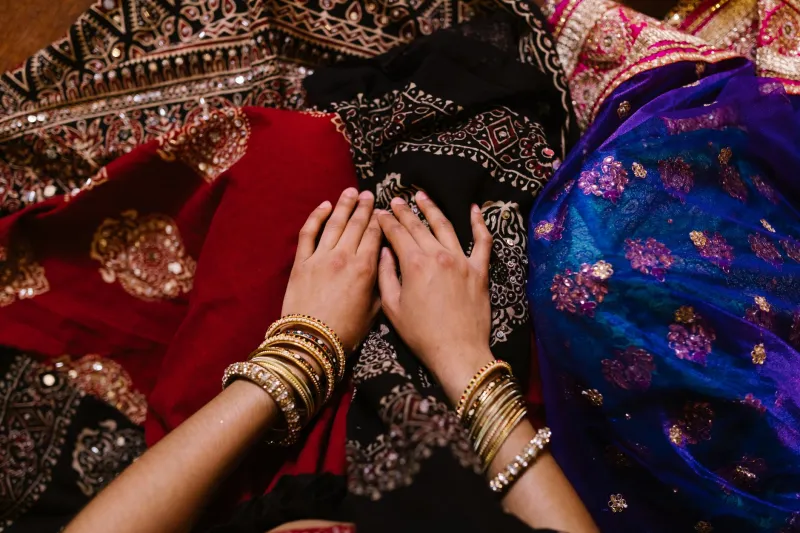
Photo: indian bride trousseau jewelry embroidered garments flat lay, via www.mytrousseau.co.uk
Open a traditional Lucknowi bride's trousseau chest and you'd find the expected: Chikankari garments worked over months by master artisans, silk saris folded with museum-level care, gold jewelry passed down through generations of women who touched it before her.
But look closer at what that chest actually was.
It was a portfolio. Her portfolio. In a society where a woman's legal and financial identity often dissolved into her husband's the moment she married, the trousseau was property that stayed hers — clothing, jewelry, and goods she controlled, could use, could leverage, and in many families, could pass to her own daughters.
The women of Awadh understood something American women are still fighting about on TikTok: love and leverage are not the same thing, and confusing them is expensive.
Stridhan: The Original 'Separate Finances'
There's a legal concept in Indian tradition called stridhan — literally "woman's wealth." Gifts given to a bride at her wedding, along with property she acquires, belong to her alone. Not the household. Not the husband. Her.
Sound familiar? It should. It's the same logic behind a prenup, behind keeping the bank account you opened at 22, behind every financial therapist in America telling women that "we share everything" should never mean "I own nothing."
The difference is that Lucknow's brides were doing it centuries earlier, embroidered into the culture itself. The gold bangles weren't just pretty. They were portable, liquid, wearable wealth — a hedge against a future nobody could predict.
What the Trousseau Teaches in 2025
Strip away the romance and a trousseau is a checklist of self-possession:
1. Enter the relationship with assets you brought yourself. Not because the relationship will fail — because a woman with her own resources negotiates differently, decides differently, and stays (or leaves) differently.
2. Keep the receipts. Traditional families documented trousseau contents meticulously. Modern equivalent? Know what's in your name. Check it annually. Romantic? No. Essential? Ask any divorce attorney.
3. Heirlooms over trends. The trousseau prioritized pieces built to last generations — handwork, real gold, quality over quantity. It's the same philosophy behind buying one great coat instead of six disposable ones, except applied to your entire financial life.
4. Beauty and function were never opposites. The Chikankari kurta was gorgeous AND it was hers. Lucknow's women never accepted the false choice between being practical and being radiant.
'Partnership' Doesn't Mean 'Surrender'
Here's where this gets uncomfortable for the romance-industrial complex: the historical record shows that the women who thrived in Awadh — the Begums who ruled, the courtesans who owned property the British didn't know how to tax — were the ones who never blurred the line between belonging to a household and belonging to themselves.
A modern bride signing a prenup isn't planning for failure. She's doing exactly what a Lucknowi grandmother packing a trousseau was doing: saying, I come to this union as a whole person, with my own value, and that value doesn't transfer on the wedding day.
The wedding is a merger. You are not the merger. You're the company that agreed to merge — and smart companies keep their own books.
Pack Your Own Chest
You don't need a literal brass-bound trunk. Your version of the trousseau might be a 401(k) in your own name, a savings account your partner doesn't touch, a credit history you built solo, or a skill set that makes you employable anywhere on earth.
The Lucknowi bride's lesson isn't cynicism. It's the opposite. Women who owned their own wealth loved more freely, negotiated more honestly, and walked taller — because staying was a choice, not a dependency.
Fill the chest. Wear the gold. Sign the papers. Then marry whoever you want, on terms you wrote yourself.
That's not cold. That's tehzeeb — grace with a spine.