She Didn't Ask for a Seat at the Table — She Rebuilt the Table Entirely: Meet Lucknow's Female Food Revolutionaries
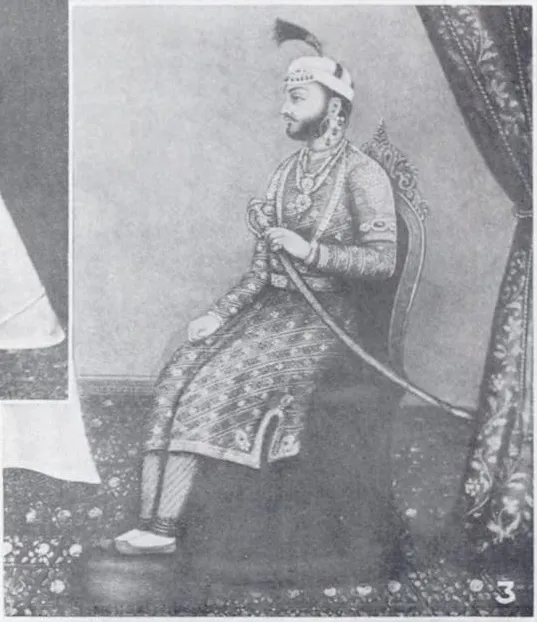
Photo: Unknown authorUnknown author, Public domain, via Wikimedia Commons
If you've ever eaten a proper dum biryani — the kind where the rice is cooked sealed under dough, where steam and spice and time conspire into something almost sacred — you already understand what's at stake when someone messes with Awadhi food. This is not a cuisine that tolerates carelessness. It is, by design, a cuisine that demands patience, knowledge, and a certain fearlessness.
Which makes it the perfect arena for the women currently turning it upside down.
Lucknow's food scene is quietly — and then not so quietly — undergoing a transformation led by female chefs, home-based entrepreneurs, and culinary storytellers who are honoring the Nawabi kitchen tradition while absolutely refusing to be imprisoned by it. Their food is making waves that are reaching Indian diaspora communities and adventurous eaters across the United States, and it's past time we talked about them properly.
The Tradition They're Working With (and Against)
To understand why what these women are doing is radical, you need to understand what they're working with.
Awadhi cuisine emerged from the royal kitchens of the Nawabs of Oudh in what is now Lucknow. The hallmarks are well-documented: the dum method of slow cooking, a profound restraint with spice that prioritizes depth over heat, and an almost meditative attention to texture. Dishes like galouti kebab — so tender they were allegedly created for a Nawab who had lost his teeth — and nihari — a long-simmered meat stew traditionally eaten at dawn — are not recipes so much as they are philosophies.
And here's the complicated part: the history of this cuisine was written by male khansamas, the royal cooks who guarded their recipes with the same intensity that trade guilds guarded manufacturing secrets. Women cooked this food at home for generations — mastering it, sustaining it, teaching it to their daughters — but the public narrative of Awadhi cooking was almost exclusively male.
That narrative is getting a rewrite.
Zara Mirza: The Chemist Who Became a Chef
Zara Mirza grew up in Lucknow watching her grandmother make korma from memory — no measurements, no timers, just a lifetime of accumulated knowing. She left for Delhi to study food science, then spent several years working in food product development before returning home with a question that wouldn't leave her alone: what would Awadhi food look like if it were designed for the way people actually eat now?
"My grandmother's korma was perfect," Zara says. "I'm not trying to improve on it. I'm trying to ask what it would say if it were in conversation with the present."
Her supper club — run out of a beautifully restored haveli in the old city — serves a rotating menu that might include a galouti kebab slider with a tamarind-chipotle chutney, or a kheer panna cotta that splits the difference between Lucknow and Paris in a way that somehow feels inevitable rather than gimmicky. Her Instagram following includes a significant chunk of South Asian Americans who DM her regularly asking when she's coming to the US.
The answer, it turns out, might be soon. Zara has been in conversations with a Chicago-based restaurant group about a pop-up collaboration. "I want American audiences to experience Awadhi food not as a museum piece," she says, "but as something that's alive and still evolving."
Noor Fatima: The Tiffin Revolutionary
Noor Fatima's story starts with a lockdown and a WhatsApp group. During the pandemic, she began cooking and delivering traditional Awadhi meals — proper nihari, slow-cooked dal, handmade sheermal bread — to neighbors in her Lucknow locality. The response was immediate and overwhelming.
"People were crying," she says, only half-joking. "They hadn't eaten food like their mothers made in years. And I thought — why is this food so hard to find? Why are we eating fast food when we have this?"
What started as a neighborly gesture became Noor's Dastarkhwan, a home-based delivery operation that now has a waitlist and ships shelf-stable versions of her spice blends and ready-to-cook kits across India. She's currently working with a US-based Indian food import company to bring her products to American consumers — specifically targeting the Indian diaspora community that, she's found, responds to her food with a kind of emotional intensity that surprises even her.
"A woman in New Jersey wrote to me that eating my nihari made her feel like she was back in her mother's kitchen in Lucknow," Noor says quietly. "That's not about me. That's about what this food carries."
Her philosophy is deceptively simple: use the best ingredients available, refuse to shortcut the cooking time, and trust that people can taste the difference. In practice, it means she still soaks her dried fruits overnight, still grinds her own spice blends, still cooks her nihari for a minimum of eight hours. "There's no version of this food that's good and also fast," she says flatly. "Anyone who tells you otherwise is selling you something."
Riya Singh: The Vegan Provocateur
If Zara is the diplomat and Noor is the traditionalist with a modern distribution model, Riya Singh is the one who walked into the room and flipped the table.
Riya's plant-based Awadhi kitchen — she runs a catering operation and a growing YouTube channel — is, to put it mildly, a controversial concept in a culinary tradition built on slow-cooked meats and clarified butter. She is aware of this. She does not appear to mind.
"People told me I was disrespecting the tradition," she says. "But who do they think kept this tradition alive for centuries? Women cooking with whatever was available. Half the Awadhi pantry is already vegetarian — the spice work, the technique, the dum method — none of that requires meat. I'm just following the logic."
Her jackfruit galouti has become something of a legend in food-curious circles, not because it pretends to be meat but because it doesn't need to. The technique — the slow cooking, the precise spicing, the careful layering of flavor — does the work. Her YouTube channel, which posts with English subtitles, has a substantial American viewership, and the comments section is full of Indian-American home cooks who describe her videos as both a cooking tutorial and a kind of cultural reclamation.
What This Means for American Tables
For the Indian diaspora across the US, the work of women like Zara, Noor, and Riya represents something that goes beyond good food. It's a permission structure. Permission to honor where you come from without being frozen there. Permission to evolve a tradition without abandoning it. Permission to be the expert in your own heritage kitchen, even when — especially when — the world has historically suggested that expertise belongs to someone else.
And for non-South-Asian Americans who are increasingly interested in moving beyond the narrow version of "Indian food" that most US restaurants have historically offered, these women are opening a door into something genuinely different: a cuisine of extraordinary sophistication, with a story worth knowing, being reimagined by people who love it too much to let it become static.
Awadhi food, at its core, has always been about transformation — raw ingredients becoming something transcendent through patience and skill and heat. The women of Lucknow's new food generation understand that better than anyone. They've been doing the transforming all along. Now they're just doing it loudly, proudly, and on their own terms.
Which, if you've been paying attention, is exactly what queens do.